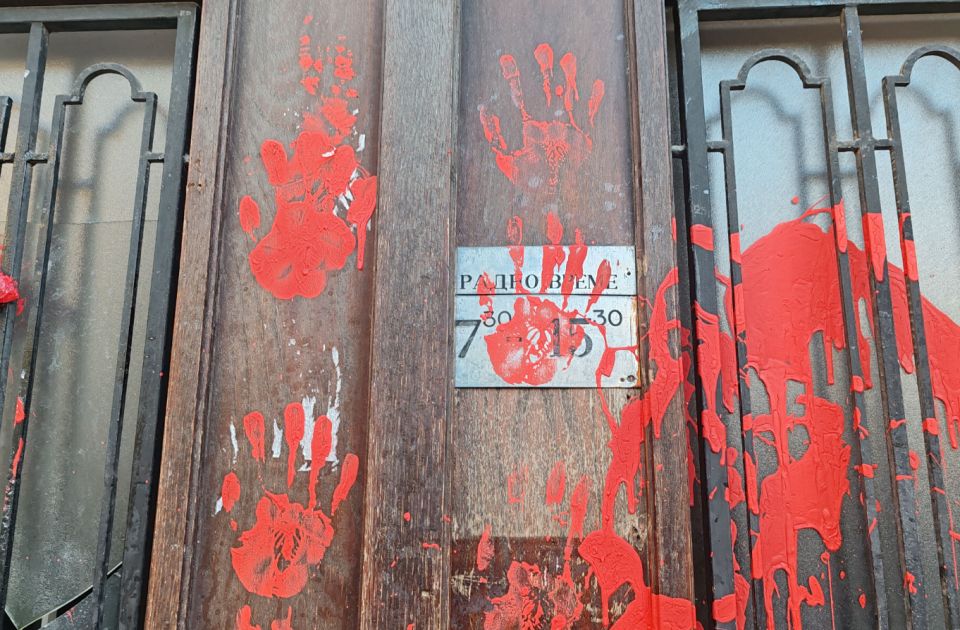
It is hard even to enumerate everything that has happened in Serbia from November 1st until today, which has plunged the country into what could be described as its deepest political and social crisis since 2000.
(Cover photo: Bloody hands on the doors of a certain public institution, a symbol of the current wave of rebellion in Serbia. Photo: 021.rs)
Prelude
After the local elections held in June, which part of the opposition boycotted, it seemed that the Serbian Progressive Party (SNS), led by authoritarian leader Aleksandar Vučić (the president of Serbia), had solidified its grip on power for the long term. This occurred in the months when the government in Priština finally established full control over the predominantly Serbian north of Kosovo, eliminating the last vestiges of Serbian statehood in the entity that Serbia legally considers its province. The lack of response from official Belgrade signaled that Serbia had, de facto, recognized Kosovo’s independence — something Western states have expected for more than a decade and a condition they are believed to have tolerated in exchange for turning a blind eye to Serbia’s undemocratic governance.
On one hand, Vučić fulfilled what had been expected of him for the past 12 years. On the other, he now needed a new card to play to ensure continued tolerance from Western powers. Part of this strategy was the semi-covert export of Serbian weapons and ammunition to Ukraine, while Serbia officially refrained from imposing sanctions on Russia. However, Vučić now unveiled a far more significant move.
During the summer months, the SNS hurried to revive the deeply controversial „Jadar“ project. This project, which had been mentioned for years, had already been halted due to mass protests and road blockades in late 2021. Yet, following a Constitutional Court decision, it was brought back to life over the summer. People across Serbia once again began protesting en masse.
The problem with the „Jadar“ project lies in its reliance on untested technologies for mining lithium and borates in regions of Serbia where agriculture is the predominant economic activity. There is a significant risk that the proposed mining methods will lead to severe surface and groundwater contamination, potentially resulting in an unprecedented environmental disaster in the wider region. Furthermore, some estimates suggest that tens or even hundreds of thousands of people may be forced to relocate from their homes in Western Serbia. It is important to note that Vučić enjoys the full support of all Western countries in this matter, even though they delay similar projects on their own territories for environmental reasons.
Particularly controversial is that the project is spearheaded by the Anglo-Australian company Rio Tinto, which is notorious for its role in ecological disasters and even civil wars it has been linked to in certain countries.
The protests first erupted in Loznica, the city at the heart of the region where mining is planned. They then spread to most cities nationwide, becoming unexpectedly large for the summer months.
The last major gathering occurred on August 11 in Belgrade, drawing a massive turnout. Following the rally, protesters organized an overnight blockade of a railway line, which the gendarmerie broke up the next morning.
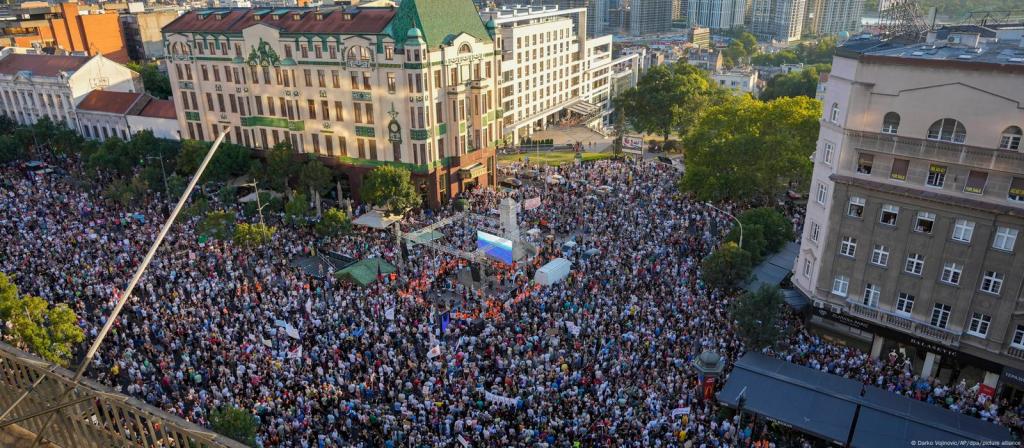
A protest against lithium mining held at Belgrade’s Terazije Square on August 11, 2024, gathered over 30,000 participants. Photo: Deutsche Welle
The protests subsided to a certain extent in the following weeks and months. On the one hand, Vučić and the SNS welcomed this development, as most previous waves of demonstrations had similarly (and spontaneously) ended without achieving tangible results. On the other hand, the government stopped aggressively pushing the „Jadar“ project, sparking rumors that there might be plans to quietly abandon the project, which 75% of citizens oppose.
This remains unclear, however, as reports also emerged suggesting that Rio Tinto had invested hundreds of millions of euros in lobbying efforts.
Independent of the „Jadar“ project, several smaller social fires were smoldering across Serbia during those weeks.
Education workers initiated a series of protests and a so-called „rotational strike,“ shortening class times to 30 minutes, though only in certain regions. Lawyers expressed dissatisfaction over proposed amendments to the Criminal Code that would allow the reintroduction of so-called „verbal offense,“ a criminal act abolished during the collapse of communist rule. Farmers held multiple blockades, protesting low purchase prices and the government’s failure to honor previous agreements. It is worth noting that some smaller civic initiatives protested the demolition of the „Yugoslavia“ Hotel (one of the last symbols of the eponymous state in Belgrade) and the planned removal of the Old Sava Bridge. The latter is supposed to be replaced with a new one, although no clear urban development plan has been presented (we’ll come back to this issue).
It seemed that the SNS could relatively easily „extinguish“ all the fires, allowing Vučić to focus on whether to amend the constitution to secure a third presidential term (the current constitution limits it to two terms, though some politicians in the past have creatively bypassed this restriction) or to settle for the prime minister’s seat. There are no term limits for the prime minister, who, moreover, formally holds significantly more powers than the president — powers that Vučić has already been extensively overstepping in violation of the constitution.
And then came Friday, November 1, 2024 —11:52 a.m.
The Trigger
In a single second, several pillars of SNS politics collapsed.
At the Novi Sad railway station, the canopy suddenly gave way.
Initial reports indicated a few injured individuals. However, within a few hours, it became clear there were fatalities as well. By evening, the death toll had „stabilized“ at 14 victims, with three more severely injured. A few days later, another person passed away – raising the toll to 15.
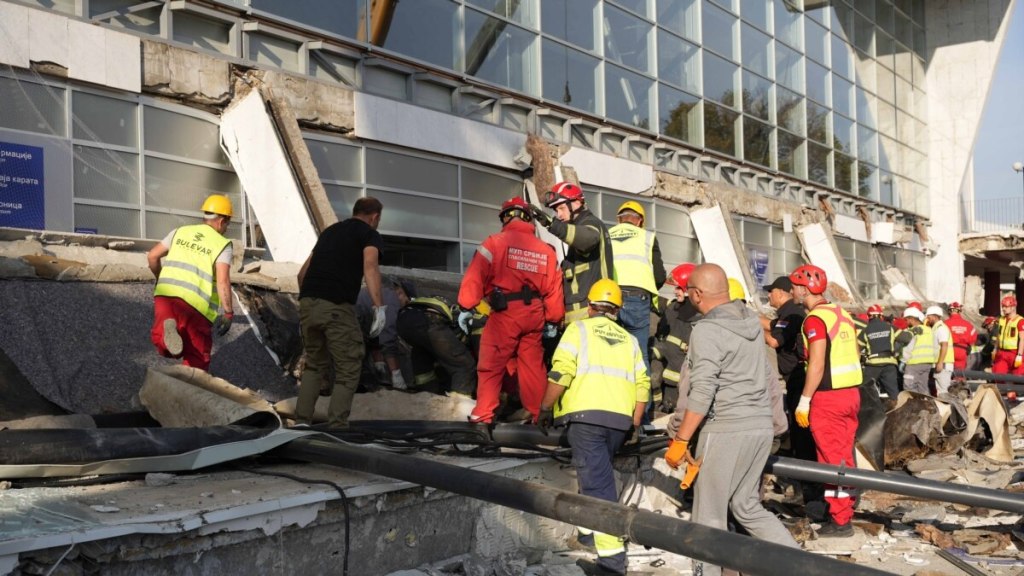
Scene after the tragedy in Novi Sad. Photo: Radio Free Europe
Why is this politically and socially significant?
The populism of the SNS, built since 2012, has largely been based on large infrastructure projects. One of the biggest is the so-called „high-speed rail“ between Belgrade and Budapest. The main investor in the railway construction is China, driven by its commercial interest in connecting ports under its control in Greece with Central Europe.
Rail transport in Serbia, once the lifeblood of the country’s logistics, has largely been neglected. Therefore, the SNS took on the project, which, although beneficial to most citizens, is also a way to secure massive votes. At the same time, it inherently opens the door to corrupt practices and money laundering (as is the case with most projects after 2012).
The entire project was supposed to be completed by the end of 2018. However, sluggishness and corrupt practices led to the fact that, by the first months of 2022, only 80 kilometers between Belgrade and Novi Sad had been opened. In terms of traffic, the railway was a huge success. Many citizens began commuting daily between the two cities, even working in one and living in the other, something unimaginable until then. The second phase, between Novi Sad and Subotica (a city near the Hungarian border), was supposed to open by the end of 2024 (the status of this project is unknown). At the same time, Chinese contractors are working in Hungary as well, although at a slower pace due to stricter EU regulatory controls. This section is expected to be completed by 2026. Of course, alongside the construction of the railway, the intermediate stations were either renovated or completely relocated.
And here is where the core of the specific problem lies.
The old main railway station (located in the center of Belgrade) was closed in 2018, and the long-abandoned Belgrade-Center station project (quite distant from the city core) was revived. This station was repeatedly completed and ceremoniously opened in the years leading up to the launch of the railway, yet to this day, not all its works have been completed.
On the other hand, the Novi Sad station seemed less controversial. This city has had a magnificent station building at the entrance to the broader city center since 1963, designed in a very original style by the Vojvodina-Hungarian-born architect Imre Farkaš.
However, this station was not spared from renovation, and the repeated pompous openings, characteristic of the ruling party. The building was partially opened in the spring of 2022 when the new railway line was launched. The legal status of the work at that time was not entirely clear. Then, its central part was closed again and worked on for over two years, only to be ceremoniously reopened in the spring of 2024. However, it soon became apparent that not all work had been completed, and the work continued.
Controversy later emerged over the reconstruction of the station’s canopy. After the incident, the authorities bombarded the public with claims that this part of the station was not part of the reconstruction. However, soon, videos surfaced showing workers „fixing“ that section of the structure. It quickly became clear that the canopy had been „decorated“ with an additional layer of glass and metal.
We will not delve into the specifics of construction expertise here. In short, the subcontractor (the SNS-affiliate company) of the Chinese contractor did not adhere to the original Farkaš design and the parameters he set. The canopy (as well as the roof it was connected to) was overburdened, making the station a ticking time bomb. Had the canopy collapsed just half an hour earlier or later, at the moment when a fast train from Belgrade arrived, the death toll could have been counted in the dozens, maybe even hundreds.
It is worth noting that the building is currently closed because its structural integrity is uncertain. There is a clear danger that further collapse could occur.
Farce
Of course, in any well-governed country, the minister responsible would immediately resign after something like this, whether or not they bear direct responsibility. In Serbia, however, this turned into a serious farce.
The Minister of Construction, Goran Vesić, only resigned after several days, following significant public pressure. However, he did so publicly, swearing that he was not guilty of anything.
After him, the rather inept Minister Tomislav Momirović, formally Vesić’s predecessor (during whose term the station was opened), also resigned. The resignation of Jelena Tanasković, the director of Serbian Railways Infrastructure, followed this.
While Momirović disappeared from public view after his resignation, Vesić and Tanasković were soon detained.
The former was taken to a detention unit in Novi Sad after a friendly chat with the police without being handcuffed, while the latter was quickly released to defend herself from house arrest. Vesić was soon released from detention, and it has been suggested that no charges have been filed against him.
Since then, both have disappeared from the public eye.
However, this wouldn’t have been significant if this scandal hadn’t taken on an entirely different dimension…
The Pot That Boils
The reason why several former government officials (and a few of their assistants) were brought in for questioning is that several memorial services for the deceased quickly turned into yet another series of serious protests against the government.
Unlike the mass protests in the spring of 2023, following the mass shootings at „Vladislav Ribnikar“ school and in the villages of Dubona and Malo Orašje, where the government’s responsibility was at best indirect, in the Novi Sad incident, the SNS regime and its corrupt practices bear the most direct responsibility. The station reconstruction cost around 65 million euros, although it was originally estimated at around 15 million euros. In short, around 50 million euros went into corrupt activities just for the station building, meaning that corruption consumed more than three times the value of the reconstruction.
On November 5th, a massive protest was held in Novi Sad — reportedly the largest in the city’s history, with over 30,000 citizens gathering. In front of the SNS offices, there were some skirmishes and minor material damage, but that was only the beginning: This time, Vučić’s machinery did not resort to the proverbial tactic of „letting the balloon deflate“ but instead sent thugs from their ranks to attack the demonstrators and orchestrate the destruction of the city (during the protests, the Novi Sad city hall was also severely damaged).
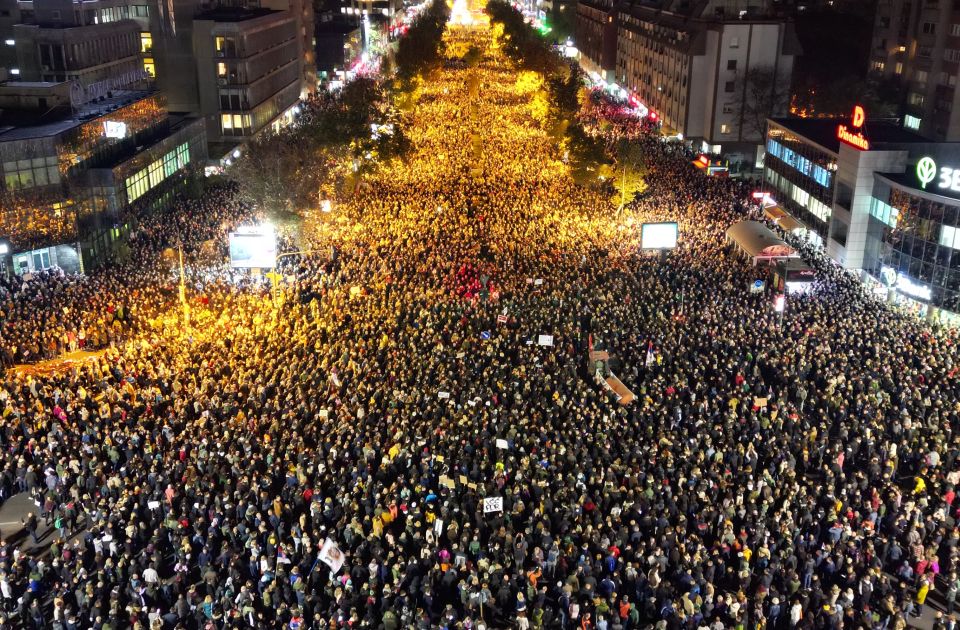
Protest in Novi Sad on November 5, 2024. Photo: 021.rs.
Some artists and former politicians, such as Goran Ješić, who defended the demonstrators from the thugs, were arrested. For the first time since 2000, the police and the ruling party’s thugs worked together.
Later in the evening, after the riots had passed, Vučić himself appeared in Novi Sad in front of the party’s offices, surrounded by a carefully selected audience, which was broadcast on media loyal to the government.
In the following days and weeks, the increasingly tense atmosphere evolved into an unannounced state of emergency. Across the country, angry citizens started vandalizing SNS offices.
However, overall, the situation remained tense but calm until the last decade of November. Moreover, the turnout was embarrassingly small when opposition parties tried to organize a protest in front of the government building. This was attributed to years of mistrust in their ability to do anything concrete, especially due to their lack of unity. This proved accurate, as the opposition’s actions were predictably lackluster, with proposals to fight through institutions they could never win (given the absolute control of SNS). In the following days, social media users and even some pro-opposition media heavily criticized these parties for their ineptitude and ineffectiveness.
Shifting our focus from Novi Sad to Belgrade, opponents of the demolition of the Old Sava Bridge set up camp and a watch team, trying to prevent workers from starting their activities. However, on November 19, the situation escalated again when the police sent multiple lines of officers and an intervention brigade to remove the camp from the bridge. During this operation, the leader of the „Kreni-Promeni“ movement, Savo Manojlović, suffered minor injuries while being arrested. From then on, the police remained on the bridge, with camps on both sides, while workers sporadically continued demolishing the bridge. A few days later, in the middle of the night, some opposition politicians and activists carried out a „raid on the bridge,“ sneaking in between two police lines. However, they were soon expelled from the site.
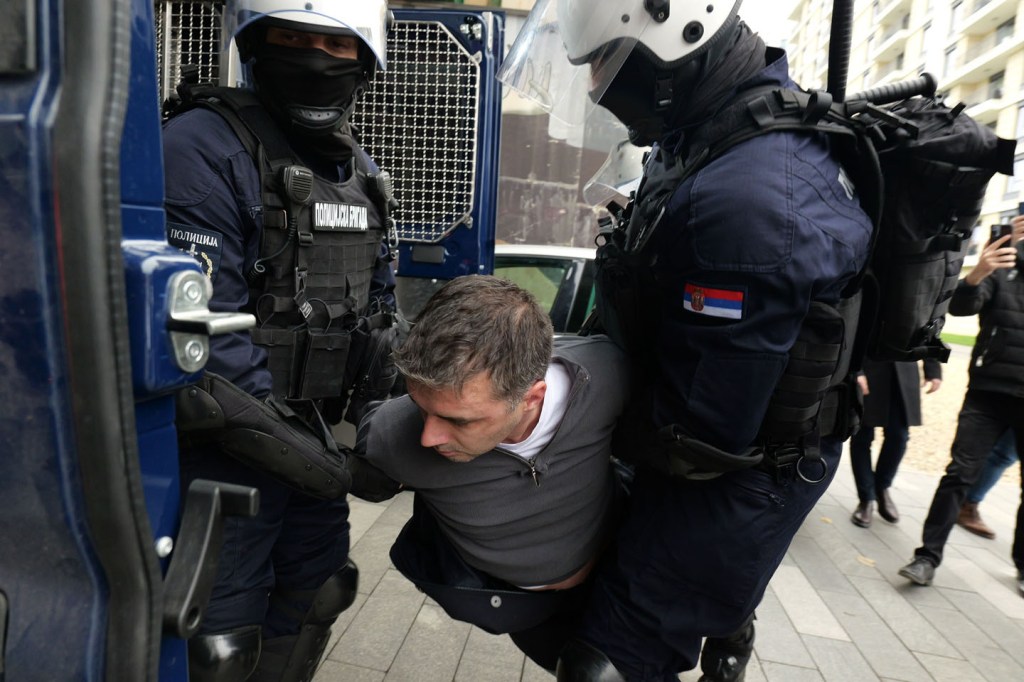
Arrest of Savo Manojlović on November 19, 2024. Photo: FoNet/Vreme.
The next protest organized by this group took place in front of the so-called „Beograd Tower,“ a 40-story skyscraper with a luxury hotel and apartments in the heart of SNS’s largest Potemkin village, the Belgrade Waterfront.
Belgrade Waterfront is a corrupt project aimed at building a completely new luxury neighborhood, with investors formally from the UAE, but unofficially, it is yet another money laundering operation. The project is being built along the Sava River, blocking the rest of the city’s view of the river and leading to the demolition of certain landmarks, such as the famous Belgrade Fair, a gem of postwar architecture. One of the alleged reasons for demolishing the Old Sava Bridge is the claim that, according to the plans of new urbanists, it does not fit into the concept of the Belgrade Waterfront.
Belgrade Waterfront and the high-speed train represent the heart of the ruling party’s “progressive” vision. Therefore, the protest and the life blockade at Belgrade Tower were serious challenges.
Of course, immediately after the protest began, thugs reappeared, this time led by certain municipal and city officials. Only the composure of the few professional police officers present prevented more serious clashes with the demonstrators.
However, the bigger challenge was yet to come.
The activists, primarily the younger ones, decided to block roads across the country every Friday at 11:52 AM (the time of the tragedy) for 15 minutes to hold a moment of silence for the 15 victims (the first protest was held for 14 minutes, as one person passed away later). As expected, the SNS sent disruptors to these gatherings, and new incidents occurred…

Paying tribute and traffic blockade in the southern city of Vranje. Photo: Vranje News.
Indeed, although these activities were atomized, they began to irritate the authorities.
But, the biggest challenge came about a week ago, at the beginning of December.
Awakening of the Neglected Cohort
Although the protest culture in Serbia, even against Vučić, has existed for 6-7 years, protests have rarely been mass movements and have rarely involved distinct university student groups.
The youth led the „Against Dictatorship“ protests (2017), but they were mostly small in number, self-organized, and connected to political parties. The middle generation mostly attended the „1 of 5 million“ protests (2018–20). In the meantime, all the protests (e.g., “Serbia against the violence”) were attended by a mix of all generations.
However, for the first time since 2000, there has been student self-organization for broader political issues.
The reasons for this change might be interpreted as follows: The „Y“ and early „Z“ generations (born from the mid-1980s to the late 1990s) were not overly interested in politics, as they saw their future in emigration to one of the Western countries. However, the mentality of the middle „Z“ sub-cohort (born in the first half of the 2000s) is somewhat different. This is partly because they are the children of the demonstrators who brought about the changes in 2000 and partly because economic conditions in Western countries have noticeably worsened in recent years. In short, unlike their 10-15 years older predecessors, this generation sees its future in Serbia and wants to fight for better economic and social conditions.
For the first time since Vučić came to power, a clear parallel has been drawn with the 1996-97 protests, which were marked by a high level of creativity and distinctive folklore that greatly irritated Milošević’s regime at the time.
However, the context is not entirely the same, nor is the mode of organization.
This time, the SNS has installed its loyalists within the university (indirectly undermining its autonomy) and informants in nearly every faculty department, making the organizational landscape significantly different. The SNS also exerts control over almost all official student parliaments. As a result, students were forced to adopt an informal method of self-organization known as „plenums,“ in which everyone had the right to participate. These plenums initiated the current protests.
The initial spark for the protests occurred during a memorial for the victims in Novi Sad when SNS thugs attacked students from the Faculty of Dramatic Arts.
The very next day, the students of this faculty, with nearly 100% support from their professors, organized a blockade and announced a suspension of classes. They demanded an end to the repression of students, the arrest of all those responsible for the violence, and (most provocatively for the authorities) the full disclosure of all documentation related to the Novi Sad tragedy.
The following week, the plenums of the Faculty of Philosophy, the Faculty of Philology, the Faculty of Mathematics, and the Faculty of Chemistry adopted these demands. Two days later, the blockade of the University of Belgrade Rectorate began, followed by the blockades of all these faculties.
Simultaneously, the blockade of the Faculty of Philosophy in Novi Sad began as the SNS-aligned university rectorate brought private security forces (read: thugs) into its building.
In the following days, the number of faculties under blockade grew.
Currently, as of the afternoon of December 9, 2024, around 30 faculties across the five largest Serbian universities are partially or fully blocked:
- University of Belgrade
- University of Novi Sad
- University of Niš
- University of Kragujevac
- University of Arts in Belgrade
Additionally, the rectorate buildings in Belgrade and Niš are fully blocked.
The students have presented diverse demands across different faculties, but they converge on three key points:
- Full disclosure of all documentation related to the reconstruction of the Novi Sad train station.
- Arrest of all individuals responsible for violence against students.
- Resignation of Prime Minister Miloš Vučević.
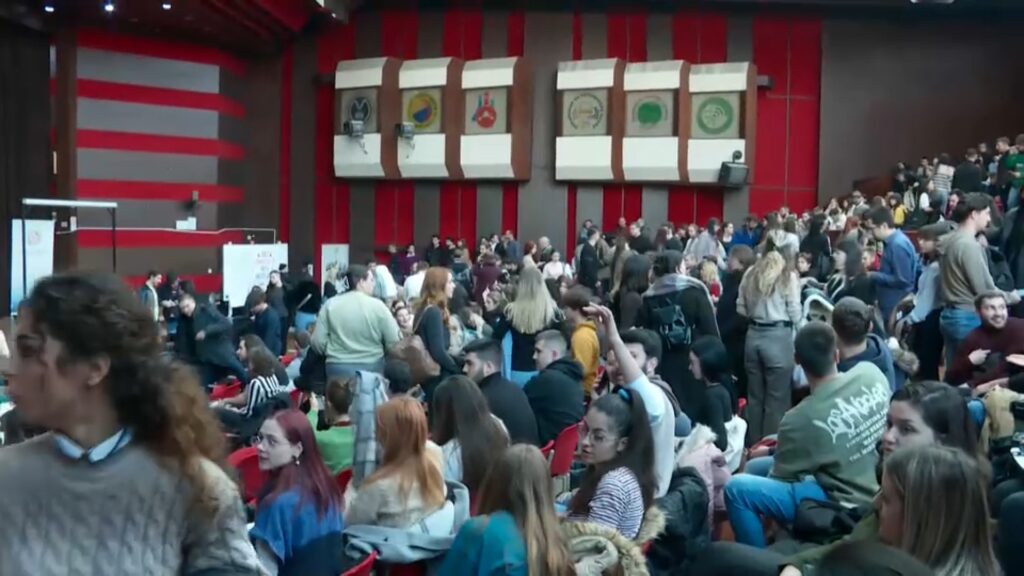
Students of the Faculty of Sciences in Niš at a plenary session with professors. Photo: N1.
Possible outcome

Aleksandar Vučić. Photo: Telegrafi
Predicting what will happen in the coming days and weeks is difficult. The government is undoubtedly the one that needs to make the next move, and we can identify three possible scenarios they might consider:
a) Letting the Uprising Fizzle Out/Redirecting Attention to Secondary Issues
This is the government’s standard strategy: do nothing and ignore the protests and unrest until the organizers’ energy is depleted. This approach has already proven effective in 2017 during the „Against Dictatorship“ protests and again in 2020, when the government successfully ignored nearly a year and a half of protests, „waiting out“ the COVID pandemic to suppress peaceful demonstrations. We must not forget that it’s December, and people will soon be preparing for the holiday season. Last year, this was a difficult challenge during the post-election protests, and the government may be counting on it again. Whether the students will act more strategically than the opposition parties remains to be seen. However, for some reason, the streets are witnessing considerable violence this time, suggesting that this situation may not be as favorable for Vučić and his followers. Reminder: This time, there isn’t a single source of the unrest but multiple ones, each tied to distinct reasons. Beyond the tragedy in Novi Sad, unresolved issues around the „Jadar“ project also contribute significantly.
b) Calling Early Parliamentary and Local Elections
Let’s be clear: Vučić is unlikely to cut his presidential term short unless he ensures he can amend the constitution to allow himself to run again (and officially expand his powers) or until he selects a figurehead successor while „settling“ for the powerful position of prime minister.
Many political analysts, such as Boban Stojanović, already believe it’s only a matter of time before Vučić opts for early parliamentary elections. However, the key question is whether this move would provide him with any added value beyond addressing the immediate crisis. The assessment is that his primary political goal is to secure a two-thirds majority in parliament (together with his coalition partners), allowing him to push through constitutional changes. These changes would also require ratification in a referendum.
Calling elections would be particularly inconvenient for the opposition, which is traditionally divided, with party popularity fragmented (as these lines are being written, yet another „small party“ has seen a wave of membership resignations). Even so, these political organizations have consistently demonstrated a lack of strategic thinking, frequently opting to participate in elections despite often having no realistic chance of surpassing the lowered electoral threshold of 3%. Furthermore, according to all objective domestic and international standards, electoral conditions and the general media representation of different political options have significantly deteriorated since 2012.
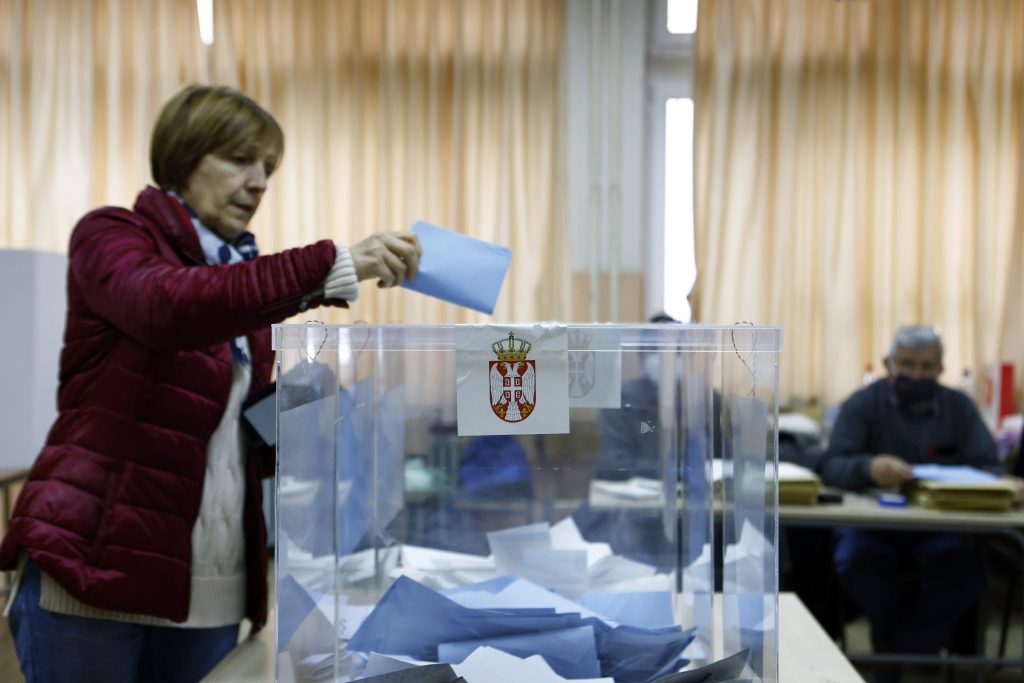
2022 Serbian general elections. Photo: Balkan Insight
On the other hand, boycotts have not proven to be particularly effective resistance tools. In 2020, most opposition boycotted parliamentary elections, while those who participated failed to pass the electoral threshold. For two years, Serbia virtually had a one-party parliament, because even the single opposition party, which passed the threshold, teamed-up with the ruling coalition.
The boycott aimed to draw international attention to the country’s undemocratic conditions. However, Western countries largely remained favorable toward Vučić, and the only tangible outcome was new elections scheduled for the spring of 2022—held under even worse conditions than before, where the opposition participated and underperformed.
The opposition is also faced with the fact that its supporters’ public opinion (much larger than its actual electorate) no longer wants any involvement in the elections under the current circumstances. Additionally, as evidenced in recent weeks, there has been a rise in the willingness for more radical forms of resistance.
Therefore, the best outcome for the opposition would be for Vučić to not call for new elections.
c) Further Escalation of the Situation
While it seems that calling new elections would be the most realistic scenario, the unknown factors are the activists, students, and actors, such as the independent group of intellectuals in the „ProGLAS“ initiative.
It could easily happen that they do not want to participate in constitutional methods of struggle and may even force a significant part of the opposition to abstain from the elections.
This could lead to further escalation of the situation and even to something that is, from a political science perspective, a taboo topic but has been increasingly mentioned in recent days: civil conflict and even civil war.
In such a scenario, which is still not overly likely for now, it is important to consider the role of various actors.
The police seem quite loyal to the current regime. Most of the media is directly under Vučić’s control. The Serbian Orthodox Church is divided into several factions, but the authorities control much of the synod and the patriarch.
The mystery in the equation remains the military.
It has not intervened in political events. Traditionally, in Serbia, it is believed that „the military is with the people,“ as it „originated from the people.“ However, the current government deserves recognition for investing substantial funds in the past decade to renew the armed and infrastructural forces.
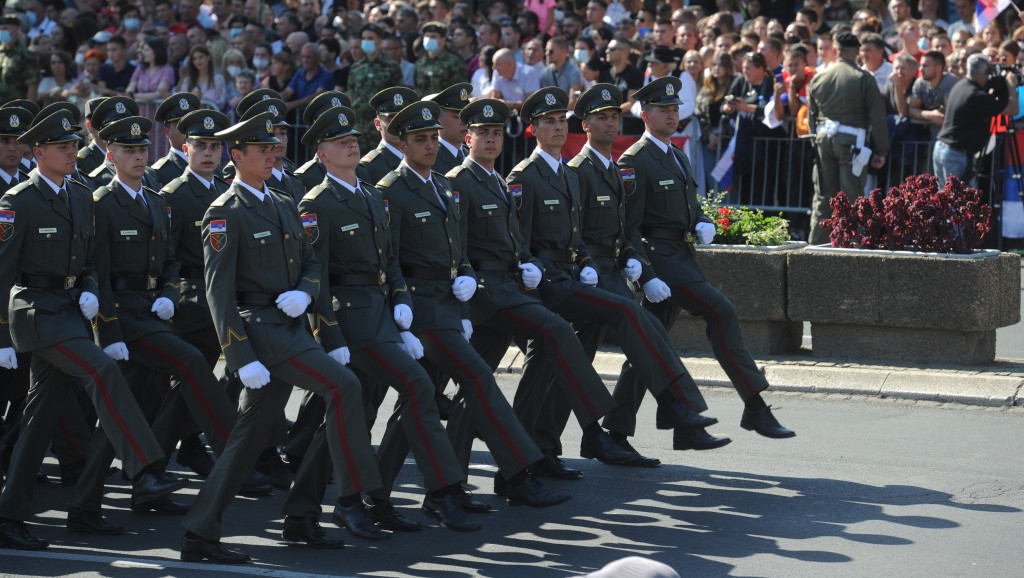
Serbian Military Parade 2022. Photo: Euronews.rs
However, while just six months ago, Vučić’s government seemed stable, its future is now uncertain, and anyone, including Vučić’s supporters, can acknowledge that we have entered the final phase of his rule.
Every government, whether democratic or authoritarian, has a certain modus operandi in its contract with the people.
Vučić’s modus operandi was to give the international community what it asked for (while capturing the media), allow his associates to enrich themselves without restraint, and offer the citizens a story about expensive infrastructure projects (which are carried out with heavy corruption and serious money laundering).
The fact that the Kosovo issue is, more or less, resolved and that the „Jadar“ project will be very difficult to realize indicates that the first aspect of this modus operandi has been shut down.
The Novi Sad tragedy exposed the phrase „At least Vučić is building SOMETHING and doing SOMETHING“ (which circulated for over ten years in pro-government media).
Therefore, what remains is take, and no government, even the most authoritarian, can rely solely on plunder.
In short, Vučić’s „new deal“ from 2012 collapsed at 11:52 AM on November 1, 2024.
Update 11/12/2024:
Since this text was finalized two days ago, the situation has further escalated.
Arguably the most significant development is that the University of Belgrade’s rectorate has supported the students’ demands and called on the authorities to fulfill them.
At the same time, the SNS-led municipal administration of New Belgrade has refused to dismiss the council member who attacked FDU students two and a half weeks ago, sparking student unrest.
By the end of the week, it is expected that all state universities, with a few exceptions, will be under blockade.


 Велтшмерц
Postavi komentar